
About the JORVIK Viking Festival
Discover all about the rich history of the JORVIK Viking Festival and explore the exciting events we’ve hosted over the past 40 years, from Viking boat races to dramatic reenactments’ and more!
The Origins of the Festival
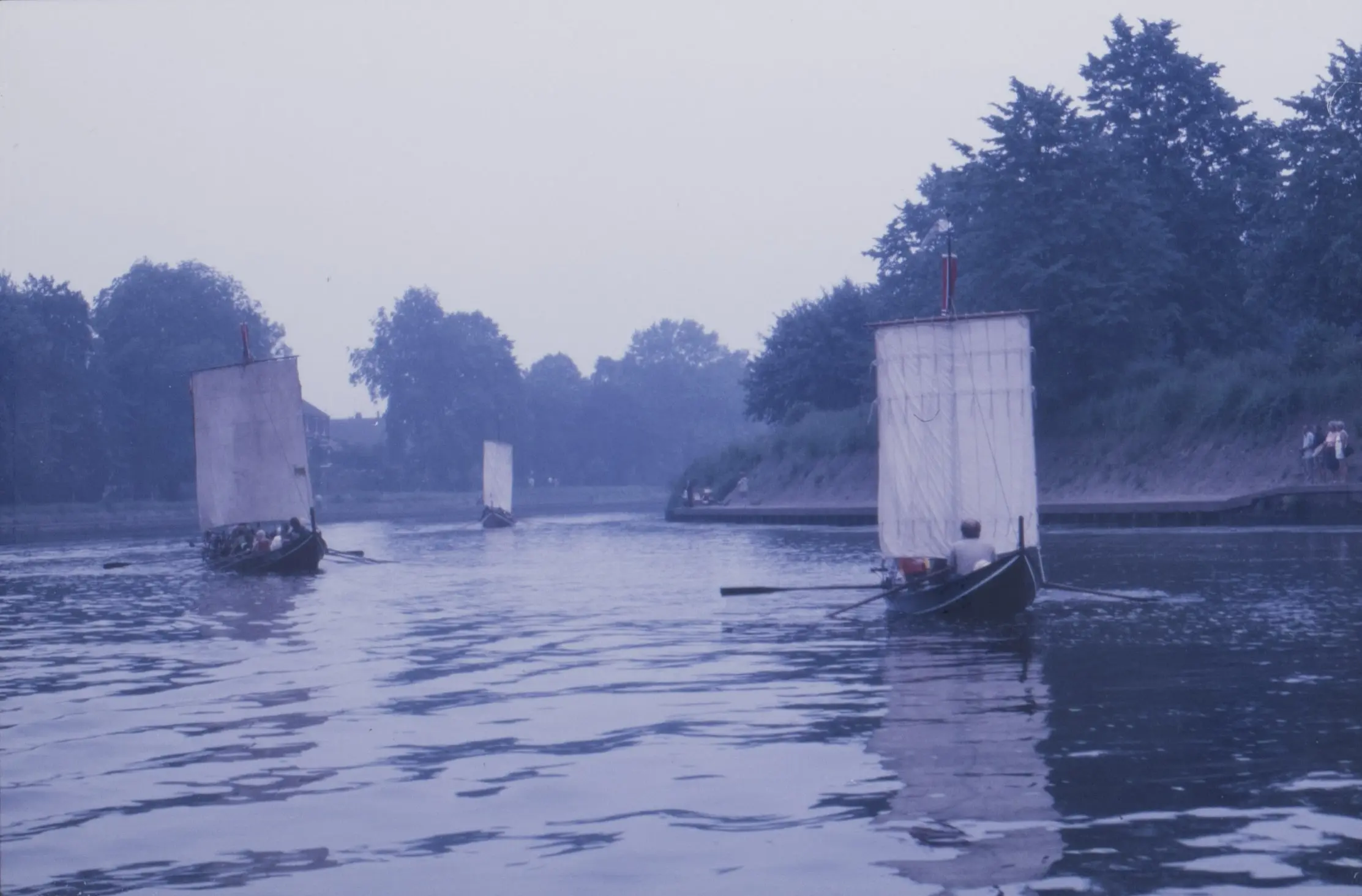
The JORVIK Viking Centre had been an instant success since its launch in April 1984. However, a downturn in visitor numbers in early 1985 prompted the idea of a festival. The JORVIK Viking Festival aimed to boost footfall in York during the February half-term holiday. Norwegian partners showed interest and support, initially focusing on a regatta of Viking-style boats on the Ouse. International teams raced boats on the Ouse, a tradition that continued until 2006.
Gifting the Tormodson and Early Regattas
After his successful North Sea crossings to York, maritime historian Olaf T. Engvig gifted the restored traditional Norwegian vessel Tormodson to the city in 1987. The Viken rowing team, led by Trond Anders Svensson, took charge of the boat. Svensson has led the Norwegian delegation ever since, which includes members of local and national government and representatives from various cultural institutions. From 1988 to 1998, a silver trophy provided by the County of Møre and Romsdal was awarded to the regatta’s winning team. The competition featured a mix of wooden crafts brought from Norway and Britain and fiberglass vessels modeled on the Viking-era Skuldelev 3. Alongside the sailing events, the Festival also developed the tradition of burning a boat on the river. This practice continued until 1999 when health and safety concerns led to its discontinuation.
Traditions and Re-enactments
While the Festival’s content, format, and duration have varied over the years, some traditions have persisted. Marches and torchlit processions by costumed Vikings have become a familiar sight in York each February. Early supporters included squads from Up Helly Aa, the Shetland fire festival, who marched in the city in 1986 and 1987. Re-enactment groups have also participated from the start, emphasizing research-based authenticity in their costumes and gear. Over the past two decades, the Regia Anglorum group has been the primary presence, offering battle re-enactments, mostly at the Eye of York. Norwegian re-enactment groups have also contributed, most notably members and international associates of the Gudvangen Vikings, led by their chieftain, Georg Hansen, who participated every year between 1996 and 2010.
The 'Jolablot' and Evolving Festival Themes
The earliest February Festivals were known as ‘Jolablot,’ an Old Norse term for a midwinter festival or sacrifice. This name suggested that the JORVIK Viking Festival was reviving an ancient tradition. In the mid-1990s, the word ‘Viking’ was dropped from the name. The Jorvik Festivals of 1994 and 1995 downplayed Viking content, favoring more multi-period cultural and historical events.
Celebrity Involvement and Support
The JORVIK Viking Festival has attracted support from a galaxy of stars, some with more obvious connections to Vikings and archaeology than others! Significant figures in broadcasting (Valerie Singleton, Patrick Moore, Magnus Magnusson, Konnie Huq, Dan Snow, Alice Roberts), TV and film (Jeremy Hardy, Robert Hardy, Terry Jones, Peter Firmin, Robin Hardy), music (George Melly, Acker Bilk, Courtney Pine, Richard Stilgoe, Neil Innes, Einar Selvik), and exploration (Per Lindstrand, Rosie Swale, John Blashford-Snell, Ranulph Fiennes, Helen Sharman) are just some of those who have made appearances.
Dramatic Performances and Spectacles
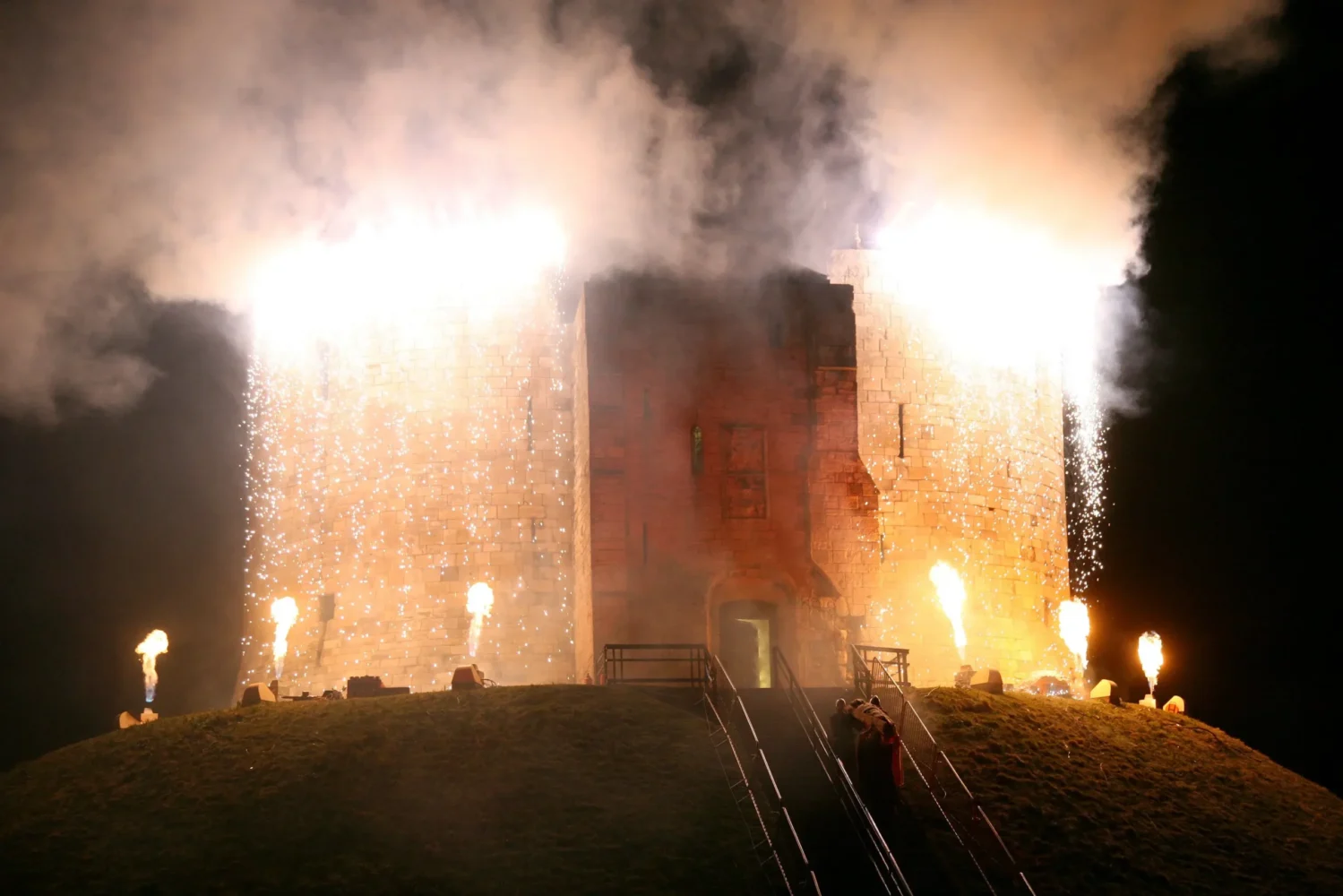
The Festival has thrilled audiences with dramatic performances over the years. Night-time battle spectaculars with fireworks and fire sculptures at the Eye of York, Clifford’s Tower, and the Knavesmire have become iconic. One of the most ambitious theatrical shows was Jonathan Clift’s Ragnarok, a retelling of key episodes in Norse mythology. It was performed at York Minster in 1988 and York Guildhall in 1989. The story of Egil Skallagrimsson’s encounter with his enemy Erik Bloodaxe in York has also been a recurring theme. It inspired performances of Egil Skallagrimsson Keeps his Head by North Country Theatre in 2010 and 2011 and the grand finale of the Follow the Vikings Roadshow in 2019. Performed in eleven locations in seven countries between 2017 and 2019 the roadshow concluded in York. Over its run it recruited locals to work with their actors and creative director and was seen by 12,500 people.
Community Involvement and Educational Outreach
The Festival always includes free-to-participate events, encouraging community involvement. Each year, community groups or local schoolchildren contribute artwork or exhibits, created in the months leading up to the Festival. In 2024, York Archaeology worked with Sheffield Mencap & Gateway to provide outreach and engagement. Members explored the Viking period through various subjects, creating imaginative responses based on Vikings in archaeology, history, and popular culture. The result was a stunning temporary exhibition at the DIG attraction.
Literary Contributions and the Bloodaxe Book Challenge
Many authors have participated in the JORVIK Viking Festival, with children’s authors particularly well-represented. Jeremy Strong and Terry Deary have made multiple appearances over the years. The Festival’s annual ‘Bloodaxe Book Challenge’, run in conjunction with York Explore Library and Archive now in its twelfth year, encourages your readers in York to use their libraries. Supported by big names like Cressida Cowell (How to Train Your Dragon), Francesca Simon (Horrid Henry), and Louie Stowell (Loki: A Bad God’s Guide to Being Good), the initiative fosters a love of reading.
Adapting to Challenges: The Festival During COVID-19
The 2020 Festival went ahead as planned, although some events were curtailed by bad weather. However, the 2021 Festival was held entirely online due to the COVID pandemic. That year, the JORVIK Viking Thing became a smash hit. With schools closed and families seeking engaging content online, the Festival team produced 39 hours of new content, including 26 hours of live streaming. Most of this was offered free of charge and reached viewers in over 60 countries. Additionally, more than 2,500 tickets were sold for special online events. The Omicron variant in 2022 led to a partial postponement, with some events happening online in February and the bulk of the program shifted to May.